
I want to tell you something before we get into squats and rest days. I am not a coach. I do not have a certification on a wall. What I have is a body I rebuilt at 44, fifteen to twenty hours a week of training that I keep showing up for, and 5.3 kg of lean muscle mass I did not have before. I am a mezzo-soprano and a learner who got tired of being talked down to by faceless fitness listicles. So this is not a generic list. This is the real protocol, written by a woman who is in the room.
If you are a woman over 50, or over 40 and feeling the ground shift, and you think you missed your window, I wrote this for you. We are going to cover exactly what to do, how often, how heavy, and whether it is safe. And then we are going to talk about the two things no one else will: how to train with your cycle and perimenopause instead of against them, and how to actually keep doing this when your brain works the way mine does.
"I did not get strong to look 25 again. I got strong so my body could carry the voice, the work, and the years still coming."
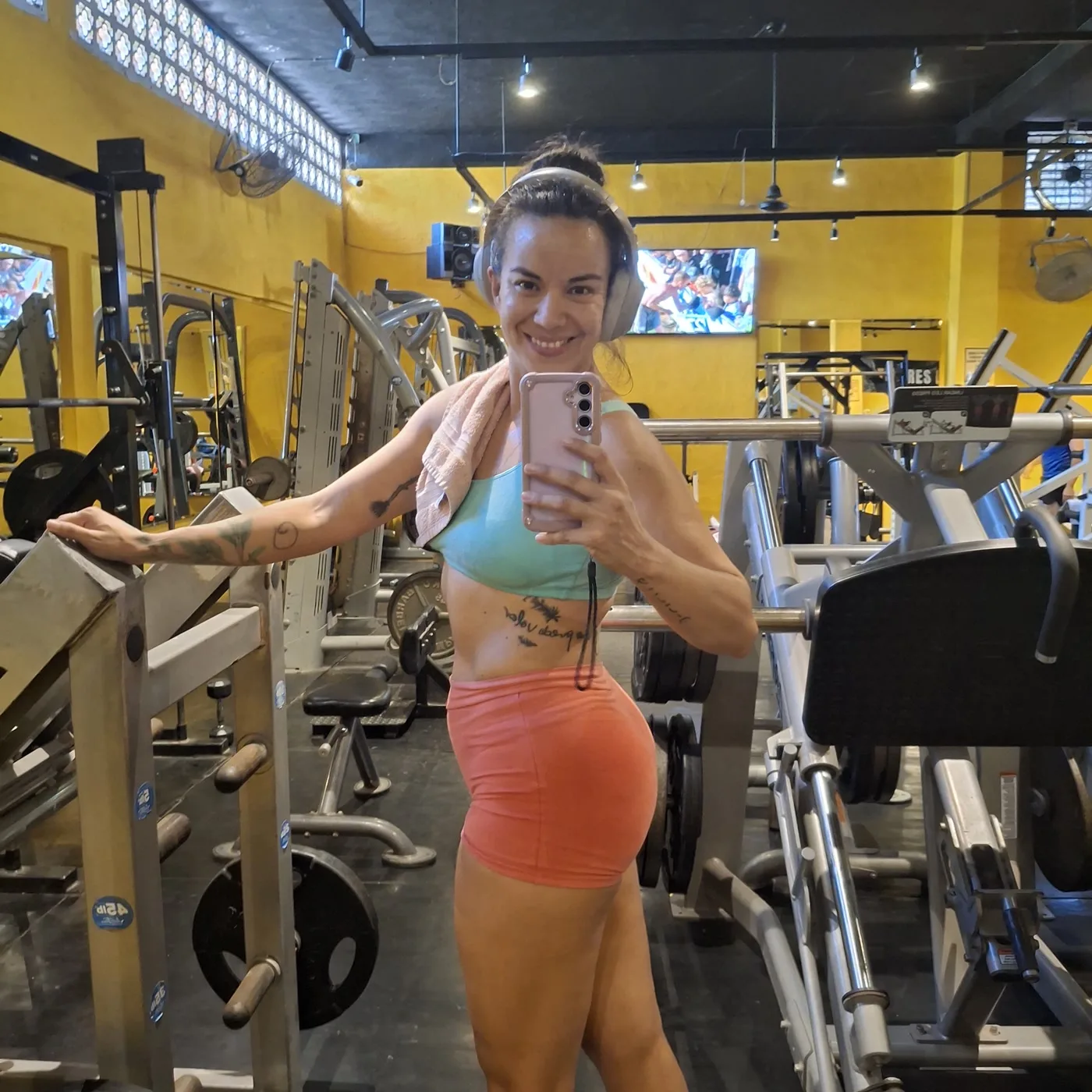
Why Strength Training After 40 Changes Everything for Women
Here is the question I see under every search, even when no one types it: is it too late? It is not. It is, in fact, the opposite of too late. After 40, strength training stops being a vanity project and becomes the single most protective thing you can do for the decades ahead. That is the reframe that finally moved me.
What we lose after 40, in plain language
Starting somewhere in our 30s and accelerating after 40, the body quietly loses muscle. The clinical word is sarcopenia, the age-related loss of lean muscle mass, and if nothing pushes back against it we can lose a meaningful slice of our muscle each decade. At the same time bone density drifts down, and what starts as osteopenia can become osteoporosis. Less muscle and thinner bone is the recipe for the frailty so many of us fear. The good news, and it is genuinely good news, is that resistance training reverses the trend on both fronts at once. The Mayo Clinic and Stanford Lifestyle Medicine both make the same case: loading muscle builds muscle, and loading bone keeps it dense.
Why estrogen and perimenopause make this urgent, not optional
Here is the part the listicles skip. Estrogen helps protect both muscle and bone, and as we move through perimenopause and into menopause, estrogen falls. That means the loss speeds up exactly when we are least prepared for it. Strength training does not stop the hormone changes, but it is the closest thing we have to a counterweight. This is why I stopped thinking of lifting as something I should do and started treating it as something my future self is counting on.
The reframe I needed
For most of my life I treated exercise as punishment, a tax I paid for existing in a body. The shift that changed everything was learning to see the body as an instrument, not an enemy. As a singer, I already understood that my body is the instrument that carries my voice, and on my artist page I write about that dual-athlete reality, the way performance and strength feed each other. This is also where my own lineage quietly lives. In reclaiming my Yaqui heritage, which is my own inheritance to learn from and never something I speak for on behalf of the Yaqui people, I found a way to understand the body as something to honor and steward rather than to fix. Strength stopped being about shrinking. It became reclamation.
The Strength Training Protocol I Actually Use
You do not need fifteen exercises. You need five patterns, repeated and slowly loaded. Everything I do still comes back to these.
The five movement patterns that matter
Almost every useful strength movement is one of five compound movements. Train these and you train your whole body for real life, not just the mirror.
- Squat (legs and glutes). Beginner version: a sit-to-stand from a chair, then a bodyweight squat, then a goblet squat holding a single dumbbell or kettlebell.
- Hip hinge (the back of the body). This is the foundation of the deadlift. Beginner version: a hip hinge to a countertop, then a dumbbell Romanian deadlift with a soft bend in the knees.
- Push (chest, shoulders, arms). Beginner version: a wall push-up, then an incline push-up, then a dumbbell overhead press or floor press.
- Pull (upper back and posture). Beginner version: a banded row, then a single-arm dumbbell row braced on a bench.
- Carry (everything, plus grip and core). Beginner version: pick up two weights and walk. This one looks too simple to matter. It matters more than anything.
Add a lunge when you want a single-leg challenge, and a few minutes of mobility work for hips and shoulders, and you have a complete full-body workout.
How many days per week and how heavy
Here is the snippet-clean version, because this is the question everyone actually wants answered:
- Frequency: 2 to 3 full-body sessions per week, with a rest day between them.
- Sets and reps: start with 2 sets of 8 to 12 reps per movement, building toward 3 sets.
- How heavy: heavy enough that the last 2 reps are genuinely hard while your form stays clean. If you could do 5 more, go heavier next time.
- Progressive overload: add a small amount of weight, or one more rep, whenever the current load stops being challenging. This slow, steady climb is the whole secret. There is no other magic.
Progressive overload is what separates training from just moving around. Your body adapts to exactly what you ask of it, so you keep asking for a little more.
Home vs gym, and what you genuinely need to start
You can run this entire protocol at home with a set of adjustable dumbbells or a couple of kettlebells and your own bodyweight. A home workout removes the biggest excuse, the drive there. A gym becomes useful later, when you need heavier loads than your home set can offer. I will be honest about my own form journey: I spent my first months filming myself, comparing it to good demonstrations, and fixing one thing at a time. I still do. You will not get it perfect on day one, and that is allowed. You only have to get it a little better than last week.
Building Muscle After 40 Without Wrecking Your Recovery
Building muscle after 40 is less about training harder and more about recovering smarter. A 25-year-old can abuse her recovery and still grow. We cannot, and honestly we should not want to. The muscle is built in the rest, not in the session.
Protein, sleep, and rest days
Three things drive recovery for a 40-plus and 50-plus body. First, protein intake: an older body is less efficient at turning protein into muscle, so we need more of it, spread across the day, to support hypertrophy. Second, sleep, which is when the actual repair happens. Third, real rest days between strength sessions. When I skipped rest in my eagerness, I did not get fitter, I got injured and discouraged. Rest is not the reward for the work. Rest is part of the work.
Injury prevention and the warm-up I never skip now
Injury prevention after 40 is almost entirely about the boring parts we want to rush past. I never skip my warm-up anymore, because I learned the hard way what skipping it costs. Five to ten minutes of easy movement, some mobility for the joints I am about to load, and a light first set to rehearse the pattern. It is not glamorous and it is not optional. The strongest thing I do most days is the unglamorous thing.
How long does it take to build muscle after 50?
You will feel stronger in two to four weeks, mostly because your nervous system learns the movements. Visible, measurable lean muscle takes longer, usually two to three months of consistent training before the changes are clearly yours. I am telling you this so you do not quit at week three. The body is keeping score even when the mirror is slow to report it.
✦ A mid-page invitation ✦
If any of this is landing, you do not have to figure it out alone. I document this whole rebuild in the open, the wins and the missed weeks both. If you want a companion on the road rather than a list to obey, come walk with me.
Strength Training and Perimenopause: Training With Your Cycle, Not Against It
This is the section no faceless brand will ever write for you, because it takes a body to write it. Strength training and perimenopause do not have to be at war. For years I fought my own menstrual cycle, pushing the same loads on every day of the month and then wondering why some weeks felt impossible. Then I started cycle syncing my training, and everything got easier and more sustainable.
Follicular vs luteal phase
In the follicular phase, the first half of the cycle, I usually have more drive and recover faster, so that is when I chase my heaviest loads and try to set new bests. In the luteal phase, the second half, energy often dips and recovery slows, so I lower the load a little, keep the patterns, and let it be a maintenance stretch rather than a breakthrough one. Same five movements. Different volume. The point is to shift loads across the month instead of demanding the same output from a body that is not the same every day.
What changes when the cycle becomes unpredictable
Then perimenopause arrives and the tidy map smudges. The cycle becomes unpredictable, and you cannot always plan around a phase that no longer keeps a schedule. So I shifted from following the calendar to following the signal. I check in with my actual energy and readiness on the day, and I let that decide whether today is a heavy day or a gentle one. The skill is not perfect prediction. The skill is listening.
Hot flashes, energy dips, and adjusting instead of quitting
Hot flashes, broken sleep, and sudden energy dips are real, and on those days the old all-or-nothing voice says you may as well skip it. Do not skip it. Shrink it. A short, lighter session on a hard day keeps the thread unbroken, and an unbroken thread is the entire game. If you want to go deeper on cycle-based programming, I keep a companion piece on cycle syncing workouts that walks through it phase by phase.
The Part Nobody Tells You: Strength Training With an AuDHD Brain
I am twice-exceptional, AuDHD, which means I am both autistic and ADHD. If you are neurodivergent too, or quietly suspect you might be, this is the section I most wish someone had handed me. Because the reason generic plans failed me had nothing to do with willpower.
Why generic programs fail a twice-exceptional brain
Generic programs assume a brain that runs on steady, gradual motivation. Mine does not. It runs on novelty and then crashes when the novelty wears off, it treats every small friction as a locked door, and it falls into all-or-nothing thinking the moment one day is missed. A program that needs perfect executive function is a program built for a brain I do not have. That is not a character flaw. It is a design mismatch.
The systems that finally made it stick
What finally worked was removing decisions, not adding discipline. I cut the friction to almost nothing: the same five patterns, the weights left out where I trip over them, my session written down so I never have to decide on the day. I lean on cues instead of motivation, and I anchor it to identity rather than willpower. I do not tell myself I have to work out. I tell myself I am a woman who trains. That sentence has carried me further than any streak. There is also a nervous system regulation gift hiding in here: lifting heavy and breathing through it settles my system in a way little else does.
Permission to miss days and return without shame
So here is the honest admission the listicles will never make: I miss days. Sometimes I miss weeks. The difference now is that I no longer let a missed day become a missed identity. I return without the shame spiral that used to keep me away for months. This is the same arc I tell from another angle in my recovery story, the practice of coming back without punishment. You are allowed to begin again as many times as it takes. Beginning again is the skill.
How to Start Strength Training as a Woman Over 50 This Week
Enough theory. Here is exactly how a beginner starts this week, without a gym membership or a single excuse left standing.
Your first three sessions, step by step
- Session 1: Warm up for five minutes. Do 2 sets of 8 reps each of a chair squat, a wall push-up, and a banded or towel row. Add a 30-second carry holding any two weighted objects. Stop while it still feels doable.
- Session 2 (after a rest day): Repeat the same four movements. Add a light hip hinge to a countertop. Same gentle effort. You are rehearsing patterns, not chasing a burn.
- Session 3: Repeat again. If any movement felt easy, add a little weight or one rep. That is progressive overload, and you just started.
The best strength training for a 50-year-old woman, and how often
The best strength training for a 50-year-old woman is the one she will repeat: full-body sessions built on the five compound patterns, done 2 to 3 times a week. That frequency is enough to drive real change while leaving room for recovery. You do not need a complicated split or fancy equipment. You need those five patterns and the patience to load them slowly.
The one rule that beats every program
Here is the rule that outranks every program ever written: pick the version you can actually keep. Consistency you can sustain will always beat a perfect plan you abandon. Two repeatable days a week, held for a year, will remake your body. Five ambitious days that collapse in February will not. Choose the boring, sustainable thing on purpose.
Frequently Asked Questions
Is it too late to start strength training at 50 or 60?
No. Muscle and bone respond to resistance training at every age, and studies on adults in their 60s, 70s, and 80s show real gains in strength and lean muscle mass within weeks. I started rebuilding mine at 44 after years of believing my window had closed. The honest truth is the best time was earlier and the second best time is this week. Your body is still listening.
How many days a week should a woman over 50 lift weights?
Two to three full body strength sessions a week is the sweet spot for most women over 50, with at least one rest day between them so the muscle can actually rebuild. Two consistent days beats five days you cannot sustain. Start at two, hold it for a month, and add a third only when two feels easy and repeatable.
Can you build muscle after menopause?
Yes. Lower estrogen after menopause makes building muscle slower and recovery more important, but resistance training plus enough protein still builds lean muscle mass in postmenopausal women. You may need more deliberate rest and a little more protein than a younger body, and progress comes, just patiently. I gained 5.3 kg of lean mass in my 40s, well into perimenopause.
Is strength training safe with osteoporosis or osteopenia?
For most people, supervised, progressive resistance training is one of the best things you can do for osteopenia and osteoporosis, because loading bone is what tells it to stay dense. That said, osteoporosis is a medical condition, so talk to your doctor or a physical therapist first, especially about high-impact or heavily loaded spinal movements. Start light, master form, and progress slowly.
Do I need a gym, or can I do this at home?
You can absolutely start at home. A set of adjustable dumbbells or a few kettlebells and your own bodyweight will carry you a long way through the five movement patterns. A gym gives you heavier loads and more variety once you outgrow your home weights, but the gym is a tool, not a gatekeeper. The most important equipment is a plan you will repeat.
Walk With Me
I am not selling you a program. I am offering you company. I am still learning this in my own body, in real time, and I document it openly so that no woman has to start where I started, alone and convinced she was too late. If this spoke to you, the next step is simply to say hello. You can find your way back to where it all connects from my home page, and when you are ready, I would love to hear from you.
If you take one thing from all of this, let it be that strength training for women over 50 is not a door that closed, it is one I am holding open for you, so come walk with me.