
How I Cycle Sync Strength Training (and Why I Started)
For years I thought the problem was me. One week I would hit the gym and the bar felt light, my mind clear, my voice ringing in lessons. Two weeks later the exact same program felt like wading through wet sand, and I would quietly disappear from my own life. I called it laziness. I called it lack of discipline. I called it every cruel name I had been handed.
The truth was simpler and far kinder. I did not have a discipline problem. I had a rhythm I had never been taught to read. When I finally learned to cycle sync strength training to the phases of my menstrual cycle, the week-to-week collapse stopped being a moral failure and became information.
I notice this twice, because I train two bodies. There is the body that lifts: the one that wants progressive overload, that chases a cleaner squat and a heavier deadlift. And there is the body that sings, the trained mezzo-soprano voice I have spent a lifetime building. My vocal folds swell in the days before my period. Breath support and stamina drift week to week. So I get a double signal every month, one from the barbell and one from the voice, and they tell the same story.
"I did not have a discipline problem. I had a rhythm I had never been taught to read."
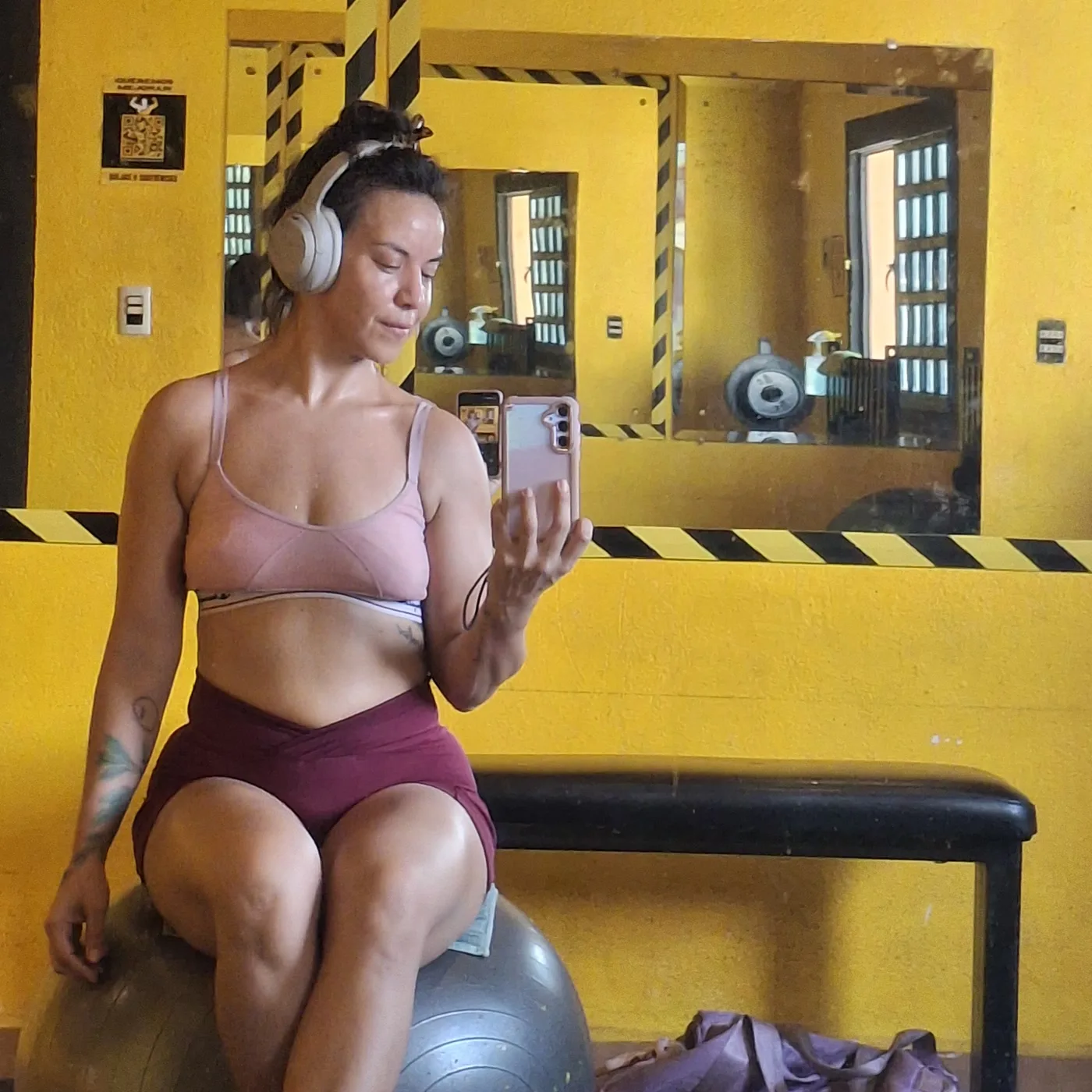
I want to be honest about where I stand. I am not a clinician and I am not here to talk down to you. I am a learner, writing only from my own body. The reframe that changed me most is this: cycle syncing is a rhythm, not a rulebook. It is not another way to fail a standard. It is a way to stop fighting your own physiology and start working with it.
I remember the session that taught me. Deep in my luteal phase, I had a heavy back-squat day programmed and I forced it. The reps felt wrong, my coordination was off, and I tweaked something in my lower back that cost me two weeks. The next morning, in a voice lesson, my stamina was gone by the second exercise and I felt the same swollen heaviness in my throat. Two bodies, one message: this is not a week for maximal output. I had simply never listened. This article is the same honesty I bring to recovery, applied to the body that trains.
The Four Menstrual Cycle Workout Phases at a Glance
Your body does not run on a 24-hour clock alone. It also runs on a roughly monthly clock called the infradian rhythm, an internal tide that rises and falls across about 28 days. The menstrual cycle workout phases are simply the four chapters of that tide, each with its own hormonal weather. When you know which chapter you are in, you stop expecting summer energy in the middle of winter.
| Phase | What is happening hormonally | How I move | Dopamine / EF note |
|---|---|---|---|
| Menstrual days 1 to 5 |
Low estrogen, low progesterone | Rest, walks, mobility, easy yoga | Low-dopamine week; permission to do less |
| Follicular days 6 to 14 |
Rising estrogen, more drive | Progressive overload, new skills | Drive returns; ride it, build habits |
| Ovulatory days 14 to 16 |
Peak estrogen, testosterone bump | Hardest output, HIIT, PR attempts | Feel invincible; train smart, not reckless |
| Luteal days 17 to 28 |
Rising progesterone, slow fade | Strength-endurance, LISS, recovery | Dopamine dips; smaller honest workout wins |
The popular term for this practice comes from Alisa Vitti and her book In the FLO, who brought cycle syncing into the mainstream wellness conversation. I cite her as the origin of the language, not as scientific proof. Where the term came from and what the evidence supports are two different questions, and I will get to the second one honestly further down.
Here is each phase as I actually live it.
Menstrual Phase (roughly days 1 to 5)
Estrogen and progesterone are both at their lowest. Energy is often low, and for me so is patience with anything strenuous. This is the inward week, and I have learned to honor it instead of bullying my way through it.
What I actually do:
- Gentle walks, ideally outside
- Light mobility and easy, restorative yoga
- Rest-leaning days, and sometimes full rest with no apology
- Strength only if it genuinely feels good, kept light
The dopamine note: this is permission to do less without guilt. The first month I let myself rest here instead of grinding, I did not lose my progress. I came back into the next phase hungry and intact, instead of injured and ashamed.
Follicular Phase (roughly days 6 to 14)
Estrogen climbs and so does almost everything I like about myself. Energy, drive, coordination, a willingness to try hard things. This is my building season, the weeks I trust myself to load the bar and learn.
What I actually do:
- Progressive overload: heavier loads, more sets, real intensity
- New skills and higher-coordination work while my brain is sharp
- Harder strength sessions back to back
As a vocal athlete I feel it here too. Stamina and brightness tend to return in the follicular phase, the breath holds longer, the high notes stop fighting me. The same voice I train as an artist tells me when my whole system is on the rise.
This is also the window where the principles I write about in strength training for women over fifty compound fastest, because progressive overload lands best when your body is primed to build.
Ovulatory Phase (around days 14 to 16)
Estrogen peaks, luteinizing hormone surges to trigger ovulation, and there is a small testosterone bump. This is my strongest window, the few days my body can express its top end. If I am ever going to chase a personal record or do my most demanding intervals, it is now.
What I actually do:
- My hardest output: HIIT, sprints, peak-effort lifts
- PR attempts when my numbers have been trending up
- The fun, expressive training my body is begging for
One honest caution: some research suggests higher estrogen around ovulation may be linked to greater ligament laxity and injury risk for some women. So I warm up longer and I keep my form non-negotiable. Feel invincible, train smart. The window is short; do not waste it in a brace.
Luteal Phase (roughly days 17 to 28)
Progesterone rises and brings the slow fade. Basal body temperature ticks up, sleep can fray, and the same workout that felt easy last week starts to cost more. This is the longest phase and, not coincidentally, the one where most plans fall apart.
What I actually do:
- Shift to strength-endurance: lighter loads, higher reps
- Low-intensity steady state and Zone 2 cardio instead of all-out efforts
- More recovery, more sleep, a deload-leaning week
- Protect the voice: premenstrual vocal-fold swelling means I do not over-sing here
The honest line: this is where most plans, and most of us, break. The luteal phase is exactly when the all-or-nothing brain whispers that if you cannot do the perfect workout you should do nothing. That is a lie. A smaller honest workout beats a skipped perfect one, every single time. Fifteen real minutes counts.
The Executive-Function and Dopamine Angle Nobody Talks About
Here is the part the clean fitness templates leave out, the part I needed most. For me, cycle syncing is not only a hormone hack. It is an executive-function and dopamine scaffold for a 2E, AuDHD nervous system that does not run on willpower the way the productivity gurus assume.
When you are neurodivergent, the question "why can't I make myself train" is not lazy, it is genuinely confusing. Some weeks the task initiation simply will not fire. Naming the phase changes the whole frame. Instead of "what is wrong with me," it becomes "this is a low-dopamine luteal week, so here is the smaller honest workout that my brain can actually start." A solvable, shame-free question.
"Naming the phase turns 'why can't I make myself train' into 'this is a low-dopamine week, here is the smaller honest workout.'"
The "smaller honest workout" is my favorite executive-function tool. It lowers the activation cost when dopamine is scarce, which keeps the habit alive through the weeks I used to vanish. The habit surviving the hard weeks is the whole game. Everything else compounds from there.
I come to my own body the way I come to my own line: as a learner reclaiming a sensitivity I was taught to override. That instinct to listen rather than dominate, to read the rhythm instead of forcing it, is something I trace back through my own heritage of listening to the body. I speak only from my line, never for the Yaqui people, but the posture of reverence is the same.
If this framing lands for you, it is the heart of my fuller approach to the body, where movement is a relationship rather than a punishment.
Cycle Syncing for Weight Loss: What I Tell People to Expect
People ask me about cycle syncing for weight loss almost more than anything else, and I will not lie to you to keep you happy. Phase-aware training can absolutely help, but not in the way a fat-loss ad promises.
What it really does is improve consistency and recovery. When you stop torching yourself in your low weeks and stop quitting out of shame, you train more weeks of the year. That steadiness, plus better recovery, is what actually moves body composition over time. The framework protects the habit, and the habit does the work.
The honest caveat: syncing is not a shortcut. Adherence, sleep and food matter far more than the timing of your squats. If those three are a mess, no calendar will save you.
One mercy worth knowing: your weight and water shift across the cycle. Progesterone in the luteal phase makes many of us retain water, so the scale can jump a few pounds that have nothing to do with fat. When you understand that, the number stops scaring you and you stop making painful decisions based on a lie the scale is telling.
What the Science Does and Does Not Say
The plain summary: the evidence is early, mixed and mostly built on small studies. There is no strong proof that a universal, fixed calendar of workouts beats simply training well and recovering well. The most reliable signal in the research is around individual variation and recovery, not a one-size-fits-all schedule.
So let me separate what is reasonably supported from what is extrapolation. Reasonably supported: hormones fluctuate across the cycle, those fluctuations can affect energy, perceived exertion and recovery, and individual responses vary widely. Extrapolation: that everyone should follow the same phase-by-phase template, or that syncing reliably outperforms a well-designed program. That leap goes beyond the data.
For a balanced medical overview, I point people to the cycle-syncing explainer from Cedars-Sinai and the clinician-facing perspective from Axia Women's Health. For the deeper evidence, sports-medicine systematic reviews on the menstrual cycle and exercise performance, the kind published in journals like Sports Medicine, consistently land on the same conclusion: effects exist but are small and inconsistent across individuals. And I genuinely respect the skeptics. The SELF-style critiques that warn against treating cycle syncing as settled science are right to do so, and I read them rather than ignore them.
Which is exactly why "listen to your own data" beats any fixed template, including mine. I am not handing you a law. I am handing you a lens. Test it against your own body and keep only what proves true for you.
How to Start Your Own Cycle Syncing Workout Plan This Month
You do not need an app, a coach or a perfect month to begin a cycle syncing workout plan. You need a notebook and one cycle of curiosity. Here is the order I would do it in.
1. Track first, change nothing. For one full cycle, just write down four things most days: energy, RPE (how hard your normal workout felt), mood, and, if you sing or speak for a living, your voice. Do not adjust your training yet. You are gathering your own evidence.
2. Map it onto the simple starter plan. Then lay your notes over the table near the top of this page. You will likely see your own version of the pattern: a strong stretch, a fade, a low point. Start placing your hardest sessions in your strong stretch and your recovery in your fade.
3. Adjust for your real life. Irregular cycles, hormonal birth control, perimenopause, shift work, all of it changes the map. If your cycle is irregular or suppressed, sync to your felt signals instead of dates. Perimenopause in particular scrambles the timeline, so trust the body in front of you over any chart.
The permission line: this is a rhythm you negotiate with, not obey. Some months you will train hard in a week the chart calls low because you simply feel great. Good. The framework serves you, never the other way around.
Frequently Asked Questions
Do cycle syncing workouts actually work?
It depends on what you mean by work. The evidence that a fixed calendar of workouts boosts performance is early and mixed. What is more reliable is that phase-aware training improves consistency, recovery and self-trust, and consistency is what actually drives results. For me it works because it stops me quitting in the weeks I used to abandon. That alone changes everything.
What workouts should I do on my period?
On my period I lean toward rest and restorative movement: gentle walks, light mobility, easy yoga and sometimes nothing at all. If energy is unexpectedly good, light strength is fine. The point is permission to do less without guilt rather than a rule that forbids effort. Listen to your own body over any chart, including mine.
Can I cycle sync if I am on birth control or have an irregular cycle?
Hormonal birth control flattens the natural rise and fall of estrogen and progesterone, so the classic four phases will not map cleanly onto your month. You can still sync to your real signals: energy, sleep, mood, rate of perceived exertion and recovery. With an irregular cycle, track those felt markers instead of dates. The framework is a rhythm you negotiate with, not a calendar you obey.
How do I cycle sync strength training specifically?
I push progressive overload and skill work in my follicular and ovulatory weeks, when drive and coordination are higher. In the luteal phase I shift toward strength-endurance, lighter loads and more recovery, treating it like a built-in deload. The menstrual week is rest-leaning. The goal is to place your hardest lifts where your body can recover from them, not to force a personal record every single week.
Is cycle syncing good for weight loss?
Syncing is not a fat-loss shortcut, and I will not sell it as one. What it can do is improve adherence and recovery, which matter more for body composition than any single workout. Sleep, food and consistency still do the heavy lifting. Water weight also shifts across the cycle, so the scale will lie to you in the luteal phase. Expect a kinder relationship with training, not a magic number.
How long until I notice a difference?
Give it one full cycle of tracking before you change anything, and a second cycle of gentle adjustments before you judge it. Most people feel the mental shift first, the relief of having language for the week-to-week collapse, within a month. Physical changes follow the consistency that the framework protects, which takes longer. Be patient with your own data.
A Last Word from Inside the Practice
I am not your guru. I am a woman who spent too many years ashamed of a body that was only ever asking to be read instead of ruled. Everything here is what I learned by listening, getting it wrong, and trying again with more tenderness.
If any of this resonates, sit with the wider philosophy in my fuller approach to the body. And if you want to do this together, with a real human who has walked it, come and meet me. This is a relationship, not a transaction.
That is what cycle syncing workouts gave me: not a stricter program, but a kinder, smarter rhythm I can actually keep, in the gym and on the stage.